2 - Exploring Technology's Influence
This project is a 0-100 fully self-guided and owned UX research project. This project was set forth to explore how Gen Z's ubiquitous use of technology is associated with negative consequences for mental health and well-being. The themes are Technology, Social Connection, and Life Satisfaction. This case study was conducted to explore the dynamic between tech use and subjective well-being. I interviewed 7 participants aged 20-23, analyzed their pain points with qualitative data, and translated the insights into an academic research paper after receiving critique from 2 psychology professionals.
UX Research
This is a UX Research Project: identifying user pain points, needs, and desires. Relating UXR to UX Design: Design implications are listed at the end.
The Problem:
Gen Z's ubiquitous technology use relates to negative consequences in mental health and well-being. Exploring how we can bolster mental health in this era is key to improving life satisfaction and purpose.
My Process:
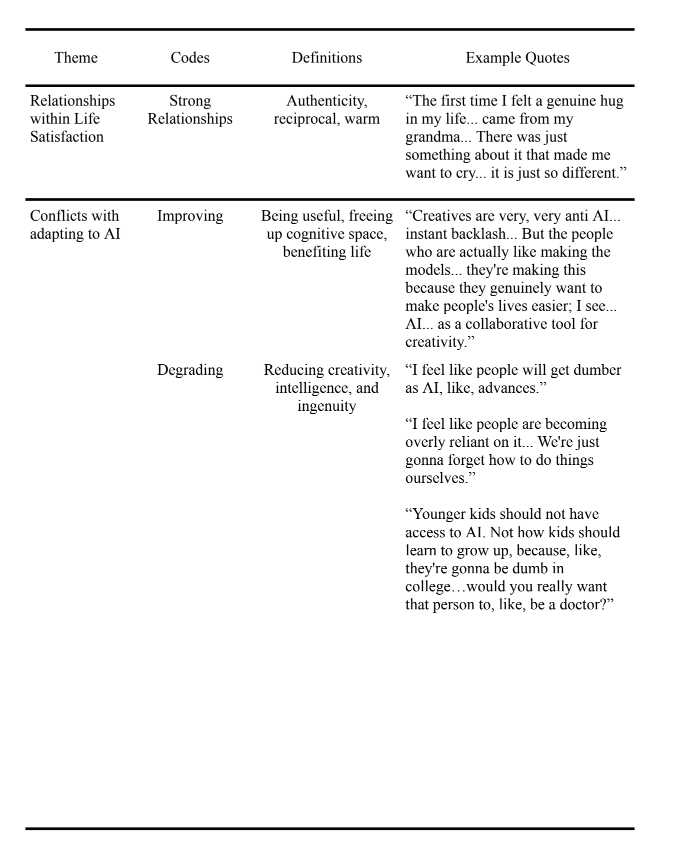
Sequentially, I reviewed current psychological research, formulated an interview protocol, conducted 7 semi-structured interviews, analyzed descriptive data on human motivations, and discovered insights through qualitative analysis. I then created a graph that displays relevant themes together. I presented my preliminary findings to a psychology class as part of my search for critique and feedback.
User Demographics
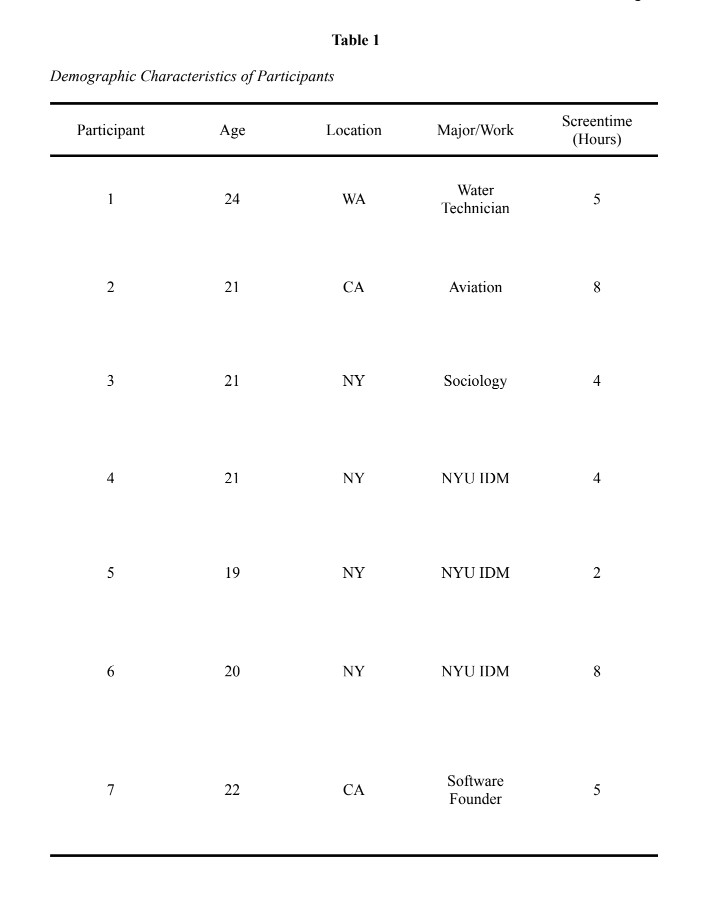
Graph 1 Themes
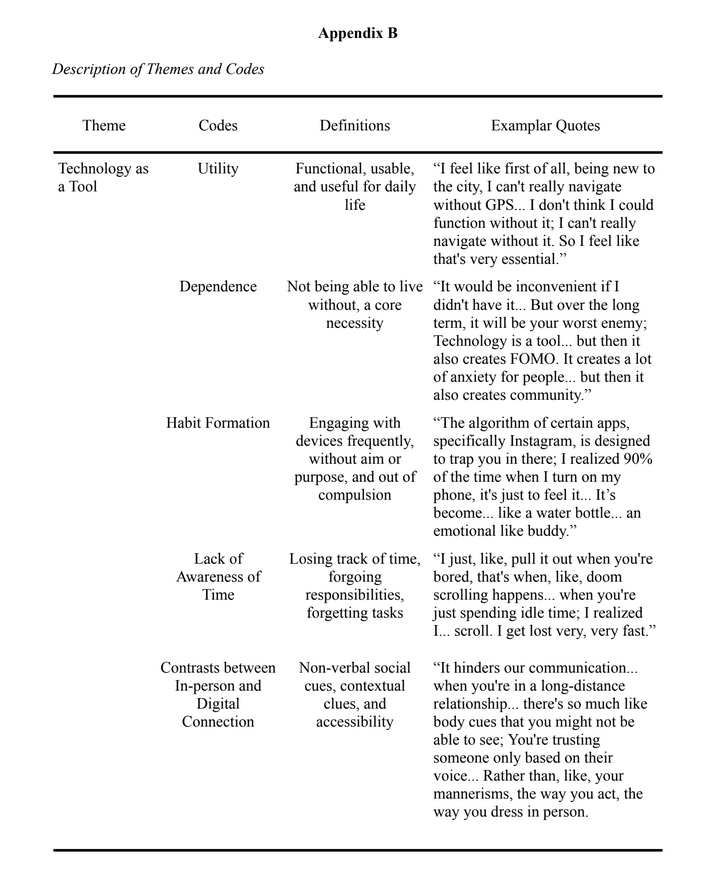
Graph 1 Themes (2)
My Solution:
Technology that Gen Z utilized consisted of AI, social media, and software. My analysis concluded that mindful use, purposeful use, and social use were factors that contributed to beneficial outcomes. I concluded that lack of awareness, social comparison, and degraded critical thinking skills were factors that contributed to negative outcomes in subjective well-being.
The Outcome:
This study extended existing literature on tech use, grounded in modern constructs such as AI. Some individuals felt lonely, some felt stuck, and this study sought to explain why users felt this way and how to counteract these stressors.
For future directions, this comprehensive User Research forms the basis for holistic and human-centric design. This structured process of finding participants, interviewing them to discover pain points, and identifying insights is key to the foundation of Product Design and UX Design.
With more time and financial support, I would pursue this project further by designing interventions to bolster well-being among Gen Z.
Design Implications
Research informs design. These insights drawn here inform various design directions related to addiction, ethicality, and mental wellness. Some design directions are: an ethical scrolling mechanism, a social connectivity app, an easy-access mental wellness wearable, or a third-space encouraging program. Amidst the massive structural change of AI, students may also feel a sense of fear related to future directions in their careers and relationships. Companies are now identifying ways to utilize AI in their employees and workflow. This research connects to companies or students, informing many different design directions for different end goals.
The research here acts as the foundation for any direction of design, led by the stakeholders in the business or problem.
Metadata:
- Role: UX Researcher, Customer Discovery, Interviewer
- Timeline: 2 months, October/November 2025
- Team: Peter H
- Tools: Zoom